Few substances shaped biblical life as profoundly as olive oil. As one-third of the "Mediterranean triad" alongside bread and wine, biblical olive oil was essential to the economy, culture, and spirituality of ancient Israel. Its value extended far beyond food, as it illuminated homes and sanctuaries, anointed kings and priests, and served as a symbol of abundance and divine favor.
The Importance of Olive Oil in Biblical
This article explores the multifaceted role of olive oil in biblical times, from scriptural references and ritual use to agricultural techniques and archaeological evidence. How was olive oil made in biblical times? What was it used for? And how much was it worth to those who depended on it? We conclude with a glimpse into how these ancient traditions are brought to life at Kfar Kedem, offering a tangible connection to the land and legacy of Israel's ancestors.
Olive Oil in Biblical Texts and Stories
Olive Branch in the Story of Noah
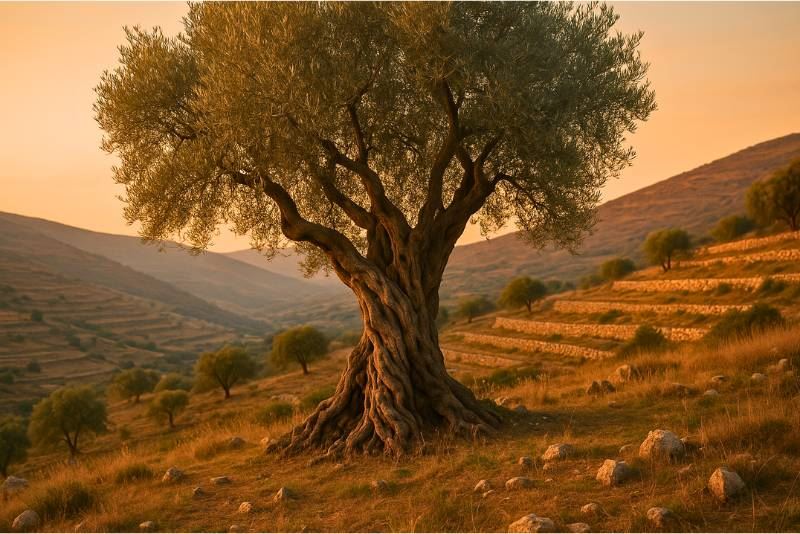
One of the earliest and most iconic mentions of the olive tree appears in Genesis 8:11, where a dove returns to Noah with a freshly plucked olive leaf, a sign that the floodwaters were receding and life was returning. The olive branch became a timeless symbol of peace and renewal.
Sacred Use in the Tabernacle and Temple
In Exodus 27:20, the Israelites are commanded to bring "clear oil of beaten olives" for the eternal light (ner tamid) in the Tabernacle. This pure oil was used to keep the menorah burning continually. Biblical olive oil was also essential in offerings (Leviticus 2) and anointing rituals for priests and holy objects (Exodus 30:22–33).
Poetic and Prophetic Imagery
The Psalms often invoke olive oil to express joy and divine favor: "You anoint my head with oil; my cup overflows" (Psalm 23:5). In Proverbs, oil is associated with wisdom and prosperity, while prophets like Hosea and Jeremiah reference Israel as a luxuriant olive tree, fruitful but often wayward.
Uses of Olive Oil in Biblical Times
Culinary Uses
Olive oil in biblical times was a dietary staple, used in cooking, baking, and as a dressing for grains and vegetables. It added flavor and nourishment, particularly in a land where meat was less frequently consumed.
Fuel for Lighting
Oil lamps, common in every household, relied on biblical olive oil for clean, steady light. This role extended to sacred uses, such as keeping the menorah lit in the Temple, a symbol of divine presence.
Medicinal and Cosmetic Uses
The ancients used olive oil to clean and moisturize the skin, treat wounds, and as a carrier for herbal remedies. It was applied to both humans and animals, reflecting its versatility and value.
Ritual and Anointing
What was olive oil used for in biblical times? Perhaps most powerfully, for sacred anointing. Kings (1 Samuel 10:1), priests (Leviticus 8:12), and even holy vessels were consecrated through oil, which came to symbolize God's presence, favor, and spiritual selection.
Olive Cultivation in Ancient Israel
Indigenous Olive Varieties and Growing Regions
The wild olive (oleaster) and cultivated varieties thrived in the Mediterranean climate of ancient Israel. The hill country of Judah, the Galilee, and the Shephelah were major growing regions, closely tied to olive oil production in ancient Israel.
Agricultural Practices
Farmers pruned trees seasonally, tended rocky soil, and relied on rainfall patterns. Olives were often grown alongside grapes and grains, forming a balanced system resilient to drought and economic shifts.
Olive Harvest and Tree Care
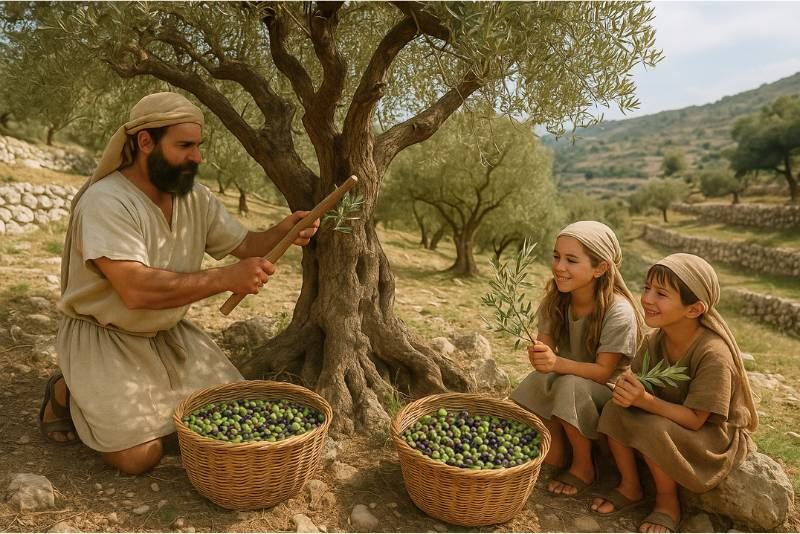
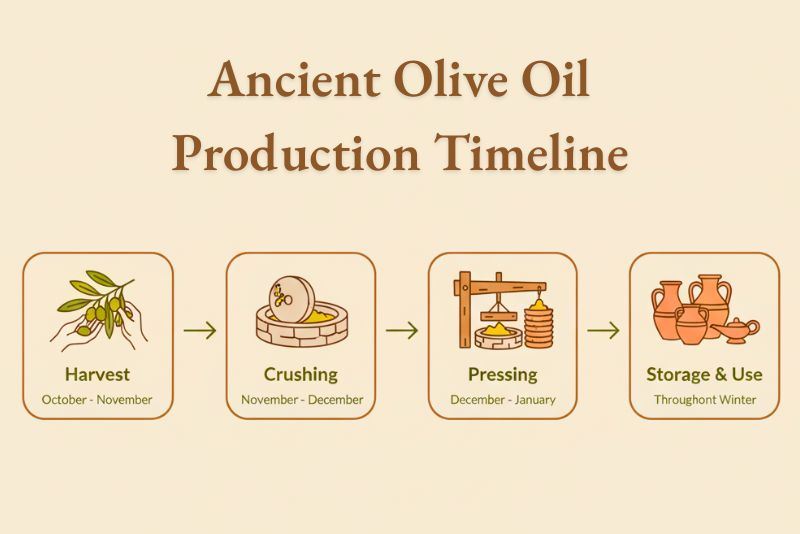
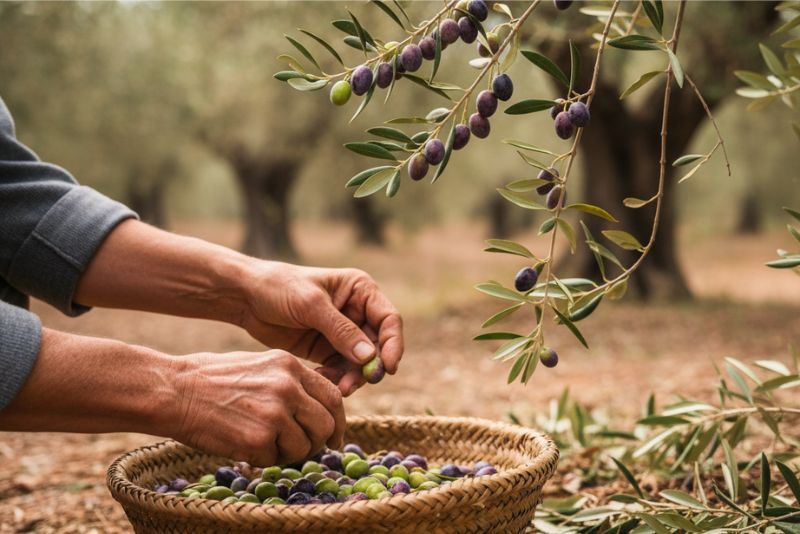
The harvest took place in late autumn (October to November), often involving the whole community. Ripe olives were hand-picked or gently knocked off branches with sticks. Trees were deeply rooted and long-lived, often passed down through generations.
Oil Production Overview in Biblical Times
Basic Steps of Biblical Oil Production
How was olive oil made in biblical times? The process began with hand-harvesting ripe olives, followed by:
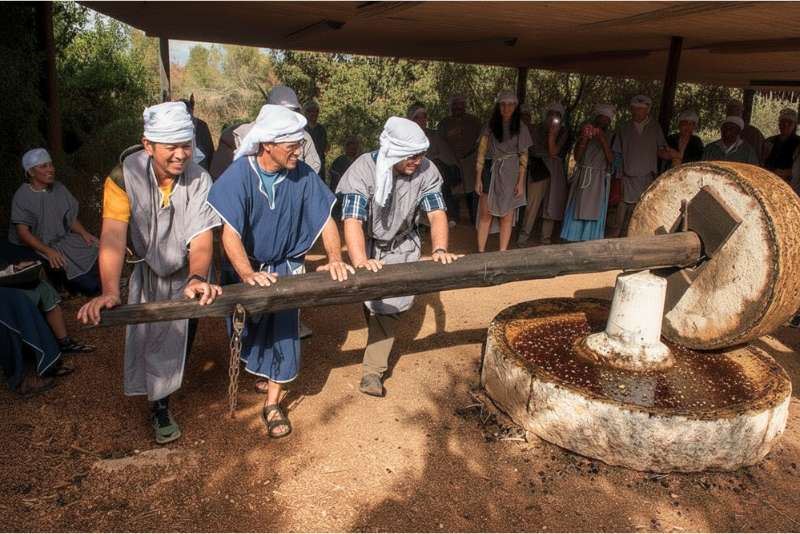
- Crushing – Using a stone basin and a millstone (yam and memel)
- Pressing – Olives were placed in woven baskets and pressed with wooden beams or stone weights
- Settling – Oil was left to separate from water and solids
- Storage – Transferred to clay jars (amphorae) sealed with wax or cloth
This careful process preserved quality and ensured the oil's suitability for ritual and domestic use alike.
Community Aspects and Seasonality
Biblical oil production was often a communal event. Villages would share equipment or operate central presses. The season had spiritual significance, with oil offered in first-fruit ceremonies and used in winter preparation.
Trade and Preservation
Olive oil production in ancient Israel supported not only local use but export as well. It was traded with Phoenicians, Egyptians, and Greeks, preserved in cool, dark storage rooms and transported in sealed containers to maintain purity. Given its many uses and spiritual importance, one may wonder: how much was olive oil worth in biblical times? While exact values varied, its consistent role in trade, worship, and daily life made it among the most prized commodities in the region.
Olive Oil Quality in Biblical Times
Grading and Ritual Use
The first pressing ("shemen zayit zach") was considered the finest and most suitable for sacred use. Subsequent pressings produced oil for common use. Ritual oil had to be pure, without sediment or spoilage.
Purity Standards
Temple oil underwent careful filtering and was used within strict timeframes. Impure or rancid oil was unsuitable for offerings or lighting the menorah.
Archaeological Evidence of Biblical Olive Oil Production
Ancient Presses
Archaeologists have discovered dozens of ancient olive presses in sites like Hazor, Beit She’an, and Tel Miqne. These include basin-type crushers and lever presses, confirming biblical oil production methods.
Storage and Trade Artifacts
Jars inscribed with "for the king" (lamelech) seals suggest state-controlled oil storage and taxation. Many storage jars contained olive oil residues confirmed by residue analysis.
Written Records
Ostraca (clay shards with writing) from sites like Lachish and Samaria list oil deliveries, quotas, and trade transactions, reinforcing the administrative role of oil in ancient Israel.
The Symbolism of Olive Oil in Biblical Culture
Symbol of Abundance and Blessing
Oil symbolized abundance, fertility, and divine favor. Deuteronomy 8:8 lists olives among the seven species of the Land of Israel, a sign of its richness.
Anointing and Leadership
Anointing with oil set apart leaders and signaled God's choice. From Saul to David to Solomon, kings were inaugurated through this act, which conveyed both honor and spiritual authority.
Olive Tree as Metaphor
The olive tree appears in metaphors for peace, beauty, and resilience. Psalm 52:8 declares, "I am like a green olive tree in the house of God," a statement of faithfulness and vitality.
Experience Ancient Olive Oil Production at Kfar Kedem
Hands-On Demonstrations
Visitors to Kfar Kedem can experience olive pressing using replica ancient tools. Crushing, pressing, and tasting their own oil brings biblical olive oil processes to life.
Educational and Seasonal Programs
During the olive harvest season, guests participate in real-time gathering and learn the spiritual symbolism behind each step. Workshops explain the uses of oil and its scriptural roots.
Taste and Connect
Tasting fresh, traditionally pressed olive oil deepens the connection to land and legacy. It's not just a flavor, it is a return to the essence of daily life in biblical times.
Olive Oil as a Window to Biblical Life
Olive oil was more than food or fuel. It was a foundation of faith, family, and survival. From sacred rituals to daily sustenance, its presence permeated every corner of ancient Israelite life.
At Kfar Kedem, these ancient practices are not only preserved, they are relived. By pressing oil with your own hands, walking among trees as old as the stories themselves, and tasting the fruit of a sacred tradition, you reconnect with a living heritage rooted in simplicity, spirit, and the enduring strength of the olive tree.
Curious to experience it for yourself? Discover more about our immersive Biblical Olive Press activity and plan your visit today.